



Baby Cereal: The Complete Guide to Feeding Your Child Well in Morocco

Baby cereal is far more than a simple transition food. It marks the first major step of food diversification, a key moment in your child’s nutritional development. In Morocco, more and more parents are turning to organic and local options — and for good reasons. This guide gives you all the keys to choose, use and understand cereals for babies, whether they are 4, 6 or 12 months old.
What Is Baby Cereal?
A baby cereal is a food specially formulated for infants, made from cereal grains (rice, oats, wheat, corn, barley, spelt) that are pre-cooked, dried and ground into a fine flour. It dissolves easily in breast milk, infant formula or water, forming a soft, digestible porridge suited to the immature digestive systems of babies.
Question: At what age can a baby be given cereal?
Answer: The World Health Organization (WHO) recommends introducing solid foods, including cereals, from 6 months of age. Some pediatricians may recommend an earlier introduction from 4 months in specific cases, but never before.
Cereals for babies differ from adult cereals in several essential ways:
- Ultra-fine texture: ground grains to avoid any choking risk
- Nutritional enrichment: iron, calcium, B and D vitamins, and sometimes omega-3
- Little to no added salt or sugar
- Suitable formulation: low in insoluble fibre so as not to overload digestion
- Allergen control: gluten-free versions available for first introductions
How Baby Cereals Work: The Nutritional Mechanism
The Role of Iron in Growth
At 6 months, the iron reserves built up during pregnancy begin to deplete. Breast milk alone is no longer enough to cover the infant’s growing needs. Iron-enriched baby cereals fill exactly this gap.
Question: Why is iron so important in baby cereal for 6 months?
Answer: Iron is essential for brain development and the production of haemoglobin. An iron deficiency before age 2 can lead to cognitive delays. Iron-enriched baby cereals cover a significant share of the recommended daily iron intake for infants.
💡 To learn more about an infant’s needs, read our article Vitameal for Babies: Optimal Nutrition and Guaranteed Safety.
Digestibility: A Precise Science
The starches in baby cereals are pre-cooked (pre-gelatinised), which reduces the enzymatic work required of the infant’s digestive system. A 6-month-old’s pancreas still produces little amylase — the enzyme that breaks down starches. Baby cereals work around this limitation through their specific preparation.
Comparison Table: Cereals by Age
| Age | Cereal type | Texture | Gluten | Key enrichment |
|---|---|---|---|---|
| 4–6 months | Rice, corn | Very liquid | Gluten-free | Iron, vitamin D |
| 6–8 months | Rice, oats | Semi-liquid | Introduce gradually | Iron, calcium |
| 8–12 months | Multi-cereal | Thick | Gluten tolerated | Omega-3, zinc |
| 12+ months | All varieties | Firm porridge | Normal | B-group vitamins |
Benefits of Baby Cereals
1. Suitable Energy Intake
Cereals are a dense source of complex carbohydrates, the main fuel for a growing brain. A 6-month-old baby needs about 600 kcal/day — cereals can cover a significant share of this.
2. Preventing Iron Deficiency
According to UNICEF, iron-deficiency anaemia affects a significant share of children under 5 in middle-income countries. In Morocco, data from the Ministry of Health indicate a notable prevalence of iron deficiency among infants. Enriched cereals are a simple and effective prevention tool.
3. Developing the Acceptance of Flavours
The semi-liquid texture of cereals lets the baby learn to handle consistencies different from milk, preparing their palate for full food diversification.
4. Supporting the Gut Microbiome
Oat- or barley-based cereals contain beta-glucans, soluble fibres that feed the beneficial bacteria of the developing gut microbiome.
Question: Are organic cereals better for a baby?
Answer: Organic baby cereals guarantee the absence of pesticide residues, GMOs and artificial additives. For infants whose liver does not yet have full detoxification capacity, choosing organic reduces exposure to undesirable substances. In Morocco, several quality organic baby foods are now available locally.

Practical Applications: How to Prepare Baby Cereal
Step by Step: Ideal Preparation
- Sterilise the equipment — bowl, spoon, bottle if used
- Warm the liquid — breast milk, infant formula or boiled water cooled to 37–40°C
- Measure the cereal — start with 1 to 2 teaspoons for the first few days
- Mix gradually — pour the cereal into the liquid while stirring
- Adjust the consistency — it should flow easily off a spoon without being too liquid
- Test the temperature — a few drops on the inner wrist
- Serve immediately — never keep an already-prepared porridge
Recommended Frequency and Quantities
| Week of introduction | Quantity per meal | Frequency |
|---|---|---|
| Week 1 | 1–2 tsp | Once a day |
| Week 2–3 | 3–5 tsp | 1–2 times a day |
| Month 2 of diversification | 2–4 tbsp | Twice a day |
| From 8 months | 4–6 tbsp | 2–3 times a day |
🍲 Want to vary meals? Discover our easy and nutritious recipes for your baby.
The Baby Food Market in Morocco: What You Should Know
Infant nutrition in Morocco is undergoing a profound transformation. Demand for organic and local baby foods keeps growing, driven by an increasingly health-aware middle class.
The Moroccan Market Context
- The infant nutrition market in Morocco is growing strongly, supported by urbanisation and rising purchasing power
- Organic product penetration is steadily increasing in major cities (Casablanca, Rabat, Marrakech)
- Moroccan parents increasingly seek local alternatives to imported brands
Question: What organic baby foods are available in Morocco?
Answer: In Morocco, several ranges of organic baby cereal are available, including formulations based on local grains (barley, corn, durum wheat). Moroccan agri-food players such as AGRO FOOD INDUSTRIE offer a complete range for baby’s diversification.
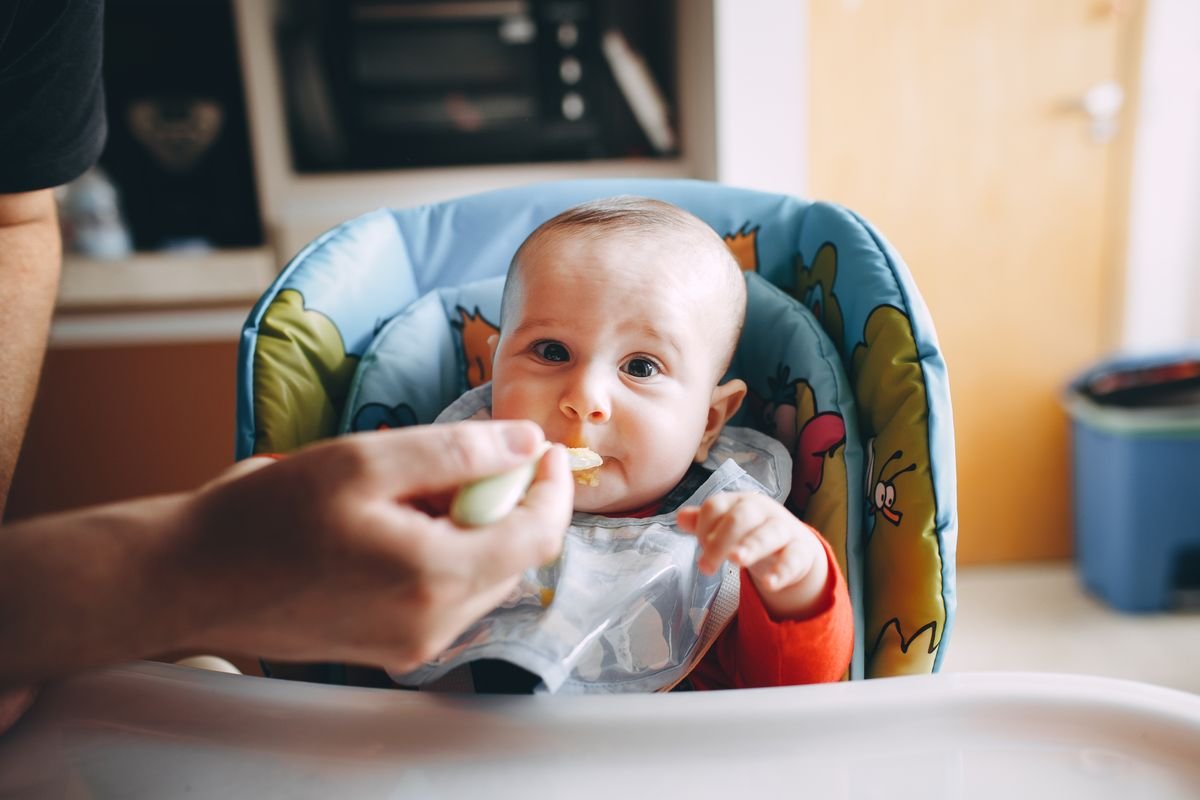
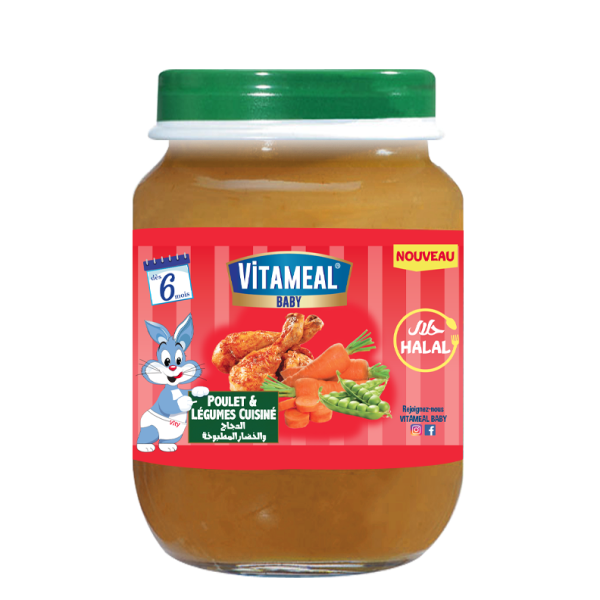
The VitaMeal range by AGRO FOOD INDUSTRIE supports baby’s diversification with jars of purées and compotes. Discover the range.
Advantages of Moroccan-Origin Baby Cereals
- Freshness: shorter distribution channels
- Climate adaptation: grains grown in conditions similar to the consumption context
- Traceability: ability to know the precise origin of raw materials
- Price: generally more competitive than imports
- Environmental commitment: reduced carbon footprint linked to transport
Challenges and Solutions: What Parents Encounter
Challenge 1 — Baby Refusing Cereals
This is the most common complaint. A baby may refuse a new texture or flavour up to 10 to 15 times before accepting it.
Solution: Never force it. Try again the next day. Mix the cereal with breast milk, whose familiar smell reassures the baby. Vary the cereals offered.
Challenge 2 — Constipation
Some babies become constipated when rice cereals — particularly low in fibre — are introduced.
Solution: Favour oats or barley, richer in soluble fibre. Ensure sufficient hydration between meals.
Challenge 3 — Allergic Reactions to Gluten
Coeliac disease and gluten sensitivity can appear when cereals are introduced.
Solution: Always start with gluten-free cereals (rice, corn). Introduce gluten gradually after 6 months. Consult a pediatrician if you observe diarrhoea, bloating or growth delay after introducing gluten.
Challenge 4 — Finding Reliable Organic Foods in Morocco
The organic infant offer can still be hard to find outside big cities.
Solution: Check platforms specialised in Moroccan agri-food products. Organic grocers, agricultural cooperatives and dedicated e-commerce sites are expanding rapidly.
Best Practices: The Standards of Pediatric Nutrition Experts
What Pediatricians and Nutritionists Recommend
- Always consult the pediatrician before introducing solids, especially before 6 months
- One cereal at a time — wait 3 to 5 days between each introduction to identify any allergies
- No salt, no sugar, no honey before 1 year
- Read the labels: check that cereals contain no artificial flavours, preservatives or hidden sugars
- Store opened boxes properly: away from moisture, in an airtight container
- Respect expiry dates: baby cereals have a limited shelf life once opened
Quality Criteria for Choosing a Baby Cereal
| Criterion | Good sign | Warning sign |
|---|---|---|
| Ingredients | Cereal as first ingredient | Sugar in 2nd or 3rd position |
| Iron content | > 3 mg per 100 g | No enrichment |
| Packaging text | Minimum age clearly stated | “From birth” claim |
| Certification | Organic, non-GMO | No certification |
| Additives | Short list, recognisable ingredients | Many E-numbers |
Common Mistakes to Absolutely Avoid
Mistake 1 — Introducing Cereals Too Early
Before 6 months, the baby’s digestive and immune systems are not ready. Early introduction increases the risk of allergies and long-term overweight.
Mistake 2 — Sweetening the Porridge
Adding sugar or honey (dangerous before 1 year due to the risk of botulism) creates harmful taste habits and increases the risk of cavities as soon as the first teeth appear.
Mistake 3 — Completely Replacing Milk
Cereals are a complement, never a substitute for breast milk or infant formula, which remains the main food until age 1.
Mistake 4 — Putting Cereals in the Bottle
Putting cereals in the bottle prevents the baby from learning to handle textures with a spoon and can lead to caloric overconsumption.
Mistake 5 — Using Adult Cereals
Adult cereals contain too much salt, sugar, fibre and sometimes additives incompatible with an infant’s physiology.
Mistake 6 — Ignoring Signs of Intolerance
Persistent diarrhoea, vomiting, skin rash, sudden food refusal — these signals call for a prompt pediatric consultation.
Expert Recommendations
The consensus of pediatric nutritionists and major health institutions converges on a simple principle: quality, simplicity and patience.
“The quality of the first cereals given to a baby lays the foundations of their eating habits for life. Favour the natural, organic when possible, and simplicity: a baby does not need ten ingredients in their porridge.”
WHO and UNICEF recommendations:
- Exclusive breastfeeding until 6 months
- Introduction of complementary foods at 6 months while maintaining breastfeeding
- Gradual diversification with iron-rich foods as the first priority
Position of the Moroccan Ministry of Health:
The national nutrition plan recommends actively fighting iron deficiency in infants through enriched diversification foods, including fortified baby cereals.
Frequently Asked Questions (FAQ)
Q: What is the best baby cereal for 6 months?
A: For a 6-month-old, favour gluten-free cereals based on rice or corn, enriched with iron and vitamin D. Avoid multi-cereal blends for the first introduction.
Q: Can you make homemade baby cereal?
A: Yes, by finely grinding cooked cereals (rice, oats, millet). But industrial baby cereals have the advantage of being iron-enriched and microbiologically controlled. The homemade version is better suited after 8 months.
Q: How many times a day should a 6-month-old be given cereal?
A: Start with a single serving per day, preferably in the morning or at midday. Observe your baby’s reaction for 3 to 5 days before increasing the frequency.
Q: How much baby cereal for 6 months?
A: Start with 1 to 2 teaspoons diluted in 60 to 90 ml of milk. Increase gradually according to your baby’s appetite and tolerance.
Q: Are gluten-free baby cereals mandatory?
A: They are not mandatory for all babies, but they are strongly recommended for the first weeks of diversification. This helps identify any gluten intolerance before its introduction.
Q: Where to find organic baby cereal in Morocco?
A: You can find it in supermarkets, organic grocers, pediatric pharmacies and from Moroccan agri-food producers such as AGRO FOOD INDUSTRIE.
Q: Do baby cereals make babies sleep longer?
A: This is a widespread myth. Scientific studies have not shown a link between evening cereals and sleep duration. A baby’s sleep is regulated by melatonin and circadian cycles, not by satiety.
Q: Can cereals be given to a breastfed baby?
A: Absolutely. Iron-enriched cereals are particularly recommended for breastfed babies because breast milk, although nutritious, is naturally low in iron from 6 months.
Conclusion
Choosing the right baby cereal is a decision that deserves attention, information and serenity. Beyond the nutritional intake, it is an invitation to discover flavours, develop food autonomy and build a healthy relationship with food from the very first months.
In Morocco, the organic agri-food sector offers growing opportunities to access quality, traceable products suited to our climatic and culinary conditions. Whether it is a certified industrial infant food or a homemade preparation based on local grains, the essential remains the quality of ingredients, the absence of unnecessary additives and respect for your child’s pace.
Always consult your pediatrician to adapt the recommendations to your baby’s specific situation — every child is unique, and so should food diversification be.
👉 Discover the AGRO FOOD INDUSTRIE range for babies and the whole family: see our products. AGRO FOOD INDUSTRIE — Marrakech, Morocco